Lessons from the Owl
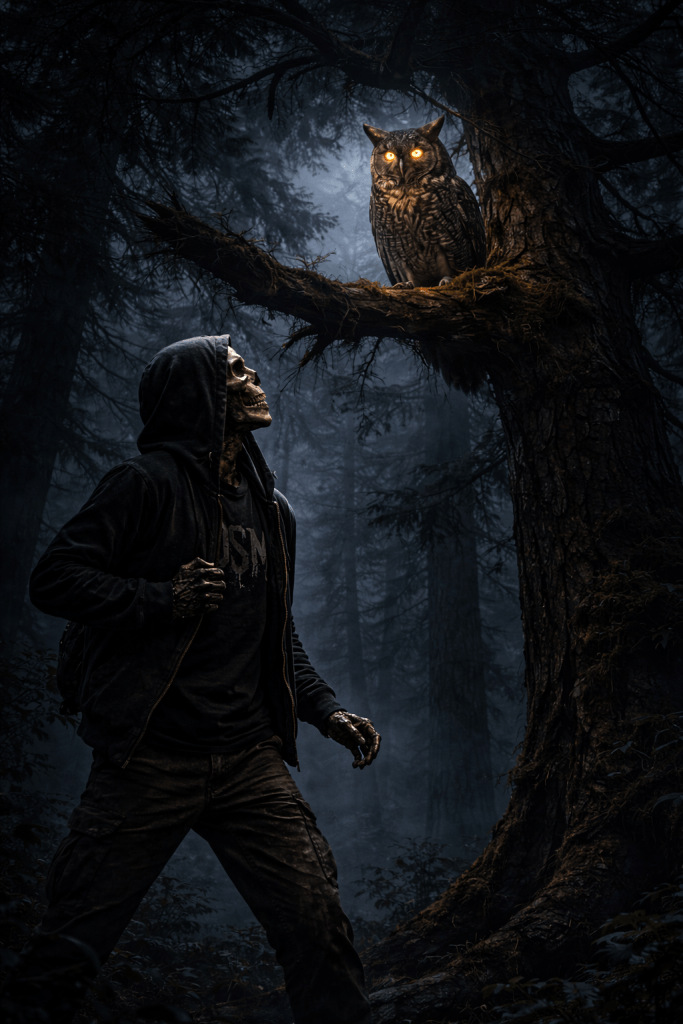
Owls have always been symbols of wisdom.
Across cultures, they represent knowledge, awareness, intelligence. To see one in the wild is rare. Intentional. Almost sacred. Many believe spotting an owl is an honor — a moment that asks you to pay attention.
Owls are nocturnal. Solitary. Watchful.
They move quietly. They observe before they act. They do not waste energy.
Yet they are not entirely alone. During mating seasons they find partners. Some species are known to nest in loose groups. Even the solitary bird understands the necessity of connection when it matters.
There’s something deeply human in that.
We Are More Like Owls Than We Think
Emotionally, many of us are solitary creatures.
We hold thoughts internally. We analyze. We replay conversations in our heads. We calculate responses. We feel deeply but often express selectively.
Some people thrive in speaking their emotions openly. They process externally. They are comfortable narrating their internal world.
Others struggle. Not because they lack feeling — but because they lack language for it.
They were never taught how to articulate it.
They learned to observe instead of reveal.
To endure instead of express.
Solitary does not mean incapable.
It means guarded.
The Difference Between Solitude and Isolation
An owl hunts alone, but it does not wander aimlessly.
It moves with purpose.
There’s a difference between being solitary and being disconnected.
Solitude can sharpen awareness.
Isolation dulls it.
The problem isn’t that we process internally.
The problem is when we never step outside of ourselves long enough to direct our growth.
This is where intention matters.
Intention Is Direction
You can endure life passively.
You can survive experiences.
You can carry pain.
You can “handle it.”
But without intention, endurance becomes drift.
Owls don’t fly randomly through the night.
They lock onto what matters.
They move precisely.
Intention directs you the same way.
- It tells you when to speak.
- It tells you when to sit in reflection.
- It tells you when to seek connection.
- It tells you when solitude is strengthening — and when it’s suffocating.
You may be wired to process quietly.
That’s not weakness.
But growth requires awareness of when to remain still — and when to engage.
Wisdom Isn’t Just Knowledge, It’s Application
Seeing an owl is considered rare because they don’t reveal themselves carelessly.
There’s something powerful in that.
Not every thought deserves to be spoken.
Not every emotion needs immediate exposure.
But the right ones do.
If you never share what weighs on you, it compounds.
If you never speak your truth, it hardens.
Wisdom is not silence.
It’s knowing what to say — and when.
Growth Through Experience Requires Intention
DSM is growth through life.
Through adversity.
Through endurance.
Through reflection.
But reflection alone isn’t enough.
You must choose where that reflection leads.
Owls don’t stare into the dark without purpose.
They scan for opportunity.
Ask yourself:
- Are you solitary because it strengthens you?
- Or because it protects you?
- Are you quiet because you’re observing?
- Or because you’re avoiding?
Intention answers those questions.
And intention directs you.
Ascend With Purpose
You don’t have to become someone louder to grow.
You don’t have to abandon your reflective nature.
But you do have to decide:
Where are you going?
Who are you becoming?
What parts of yourself need to be spoken?
What parts need to be strengthened?
Carry your awareness like an owl in the night.
Move deliberately.
Choose intentionally.
Grow through what you experience.
Because endurance without direction is survival.
But endurance with intention?
That’s ascension.
If this resonated, follow along for more Dark Summit Mindset reflections. 🦉🏔️
 The Dark Summit Mindset
Leave a comment